What Is Arc by Circle and How Lighthouse Adds the Storage Layer
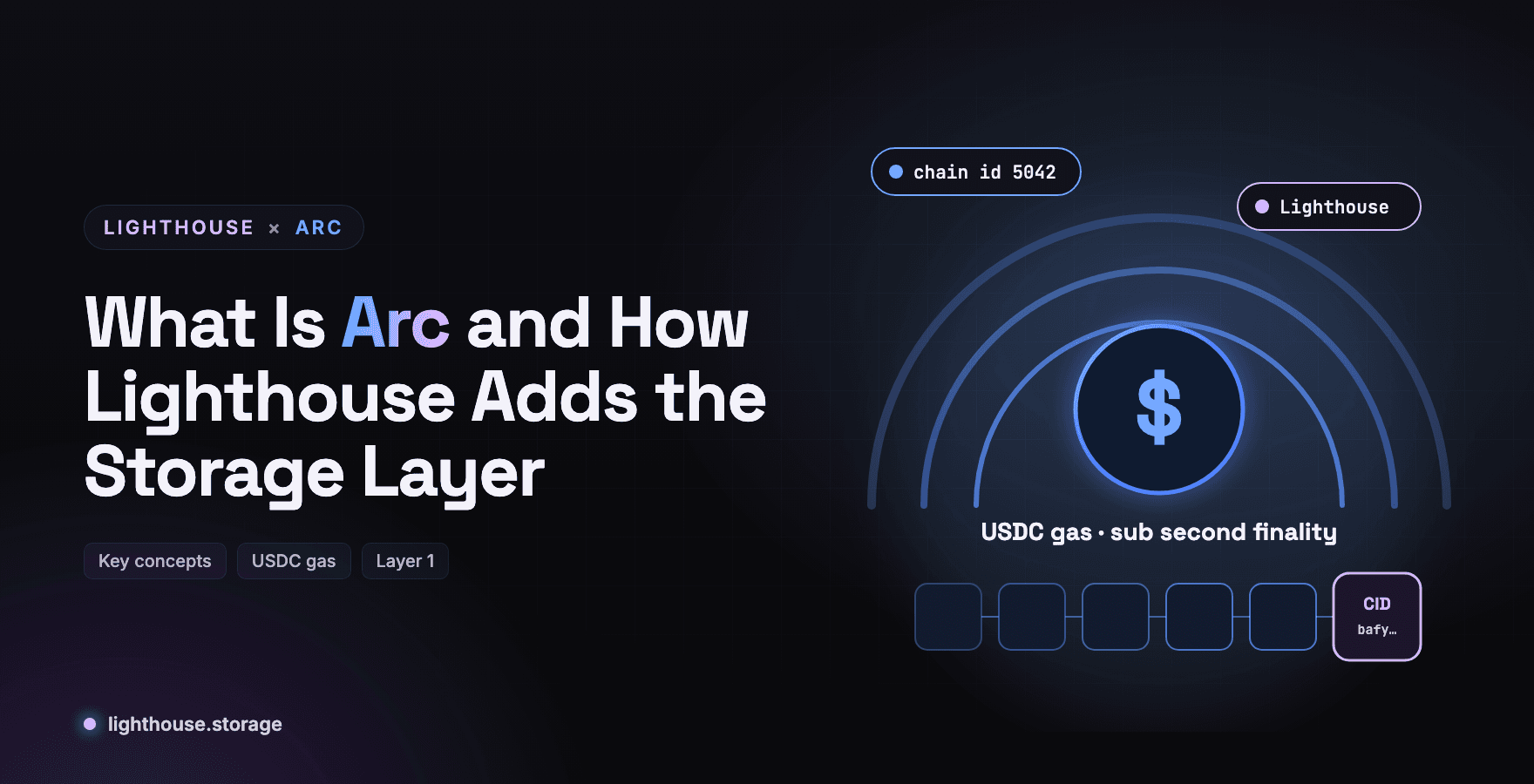
Arc makes the dollar the native unit of a blockchain. Settlement becomes instant and predictable. The contracts, invoices and records that explain each payment still need somewhere to live.
Circle launched Arc mainnet on September 16, 2026. It is an open, EVM compatible Layer 1 where gas is paid in USDC, finality is deterministic and sub second, and the founding validators include BlackRock, DTCC, Visa, Mastercard and Standard Chartered. During its testnet year Arc processed more than 700 million transactions across more than 1,200 projects, and over 100 institutional builders were live at mainnet.
This post explains what Arc is, what makes it different from the EVM chains you already build on, and where Lighthouse fits in an Arc application.
Arc at a Glance
| Arc | |
|---|---|
| Built by | Circle |
| Type | Open Layer 1, EVM compatible |
| Mainnet | Live since September 16, 2026 |
| Mainnet chain ID | 5042 |
| Testnet chain ID | 5042002 |
| Gas token | USDC (18 decimals natively, 6 decimals through the ERC-20 interface) |
| Consensus | Malachite, Circle's Tendermint style BFT engine |
| Finality | Deterministic, sub second |
| Execution | EVM, built on Reth |
| Validators | Permissioned founding set today, proof of stake planned for 2027 |
| Founding validators | BlackRock, DTCC, Galaxy, ICE, Mastercard, MoneyGram, SBI Group, Standard Chartered, Sumitomo Corporation, Visa, Worldpay |
| Explorer | explorer.arc.io |
Four Ideas That Make Arc Different
1. Dollars as gas
On most chains a user must hold a volatile token to pay fees. On Arc, fees are paid in USDC, so costs are quoted and budgeted in dollars. For a payments company, a treasury desk or an AI agent with a budget, that removes an entire class of operational work: nobody has to top up ETH or hedge fee exposure.
A developer detail worth knowing: native USDC balances use 18 decimals at the protocol level, such as eth_getBalance and msg.value, while the USDC ERC-20 interface uses the familiar 6 decimals. Mixing the two is the most common first bug.
2. Deterministic finality
Arc runs Malachite, a BFT consensus engine. A transaction is either not yet committed or final, with no probabilistic reorg window. For payments and capital markets settlement, "final in under a second" is a different product from "probably final after a few blocks."
3. Opt in privacy
Arc is building confidential transfers and balances with view keys, so an institution can keep amounts private while still granting an auditor or regulator visibility. This is opt in and still rolling out.
4. Built for agents and FX
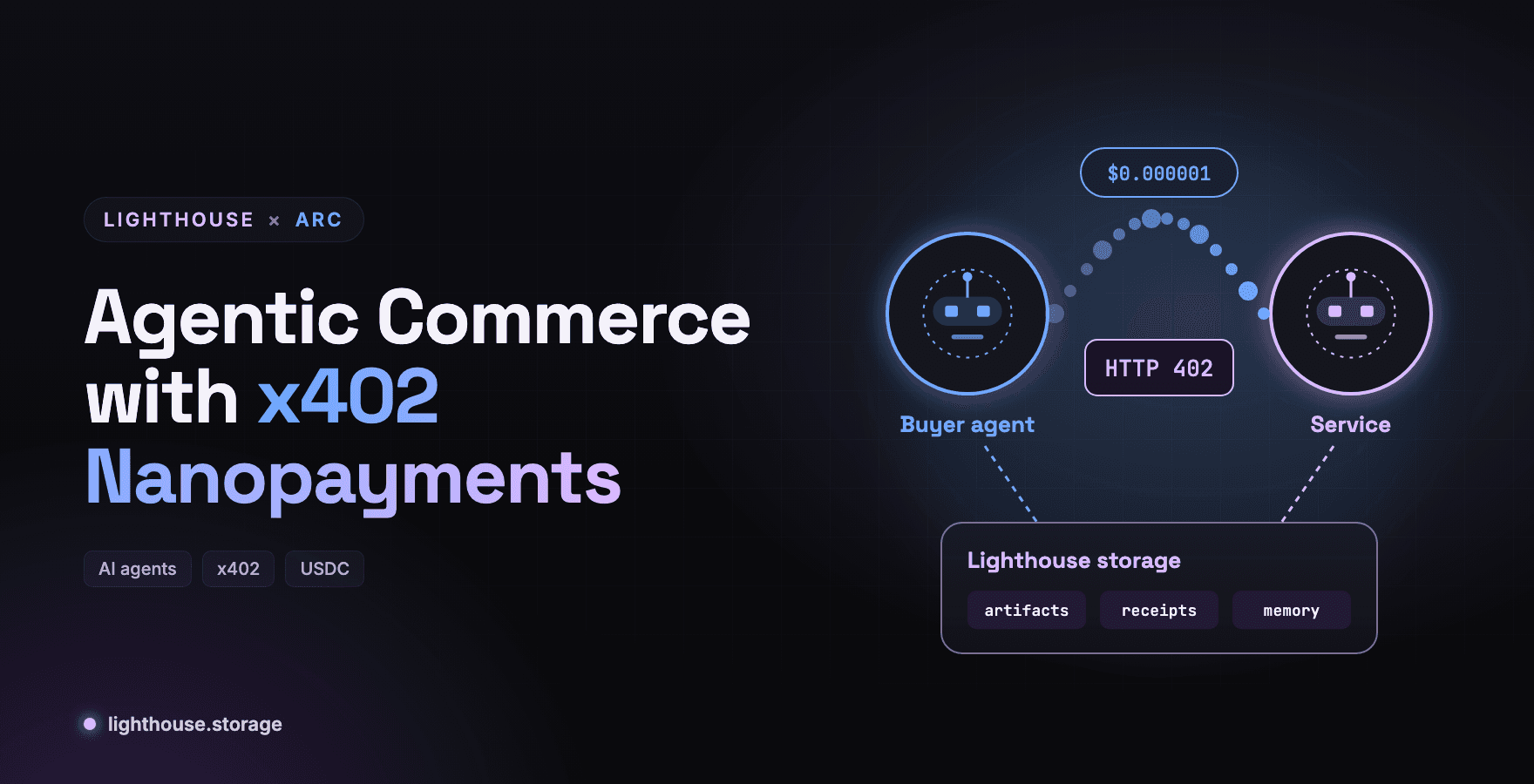
Circle's Agent Stack brings Agent Wallets, Nanopayments and an Agent Marketplace. Nanopayments combine the x402 protocol with Circle Gateway batching, so payments as small as a millionth of a dollar become practical. Circle StableFX enables round the clock onchain FX between stablecoins such as USDC and EURC.
import { defineChain } from "viem";

export const arc = defineChain({
  id: 5042,
  name: "Arc",
  nativeCurrency: { name: "USDC", symbol: "USDC", decimals: 18 }, // native representation
  rpcUrls: { default: { http: ["https://rpc.mainnet.arc.io"] } },
  blockExplorers: { default: { name: "Arc Explorer", url: "https://explorer.arc.io" } },
});
What Arc Does Not Store
Arc settles value. It is not designed to hold files, and no EVM chain is: contract storage costs grow with every byte, and documents do not belong in a state trie.
Yet Arc's target use cases are document heavy:
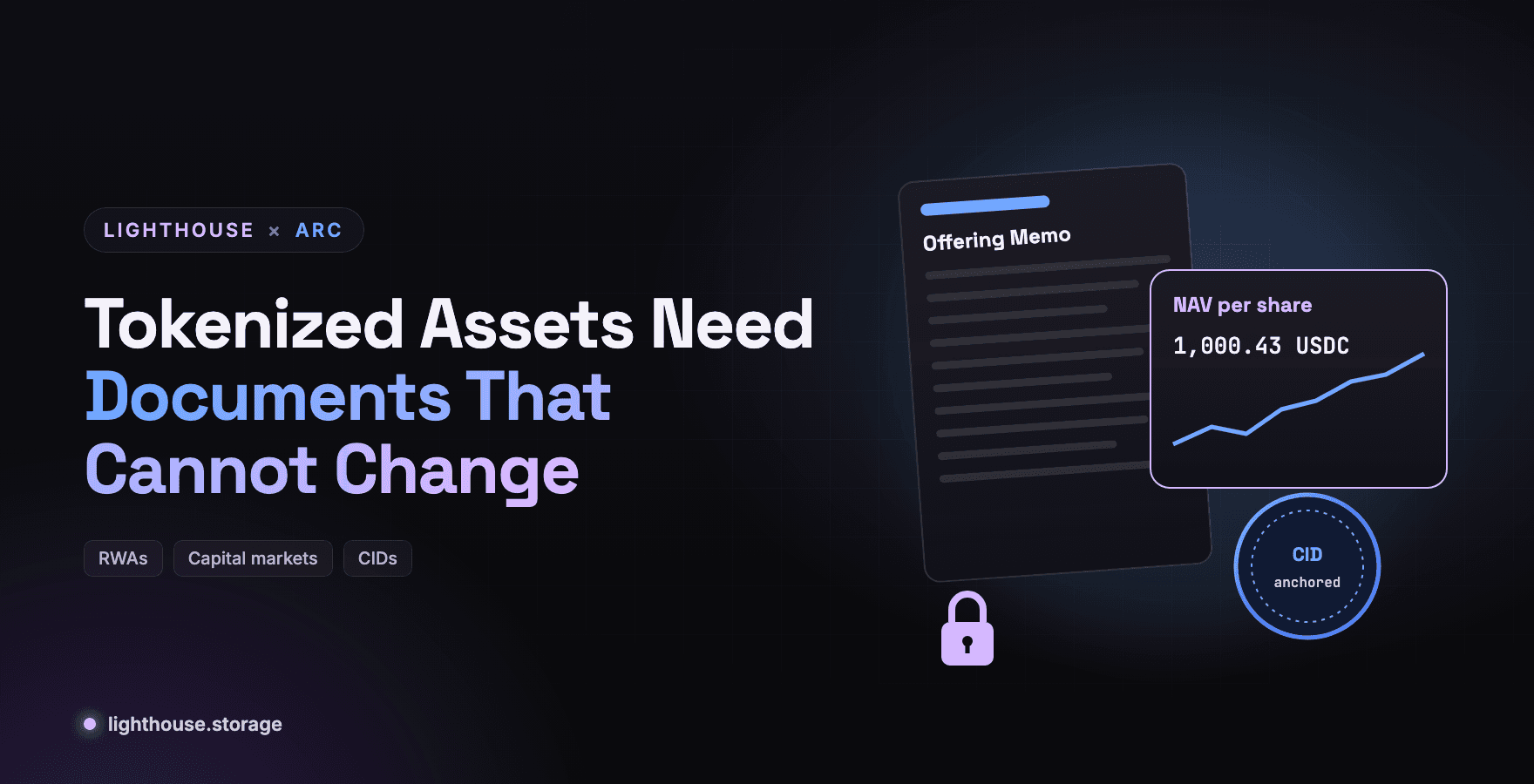
- Tokenized assets need prospectuses, NAV reports and attestations.
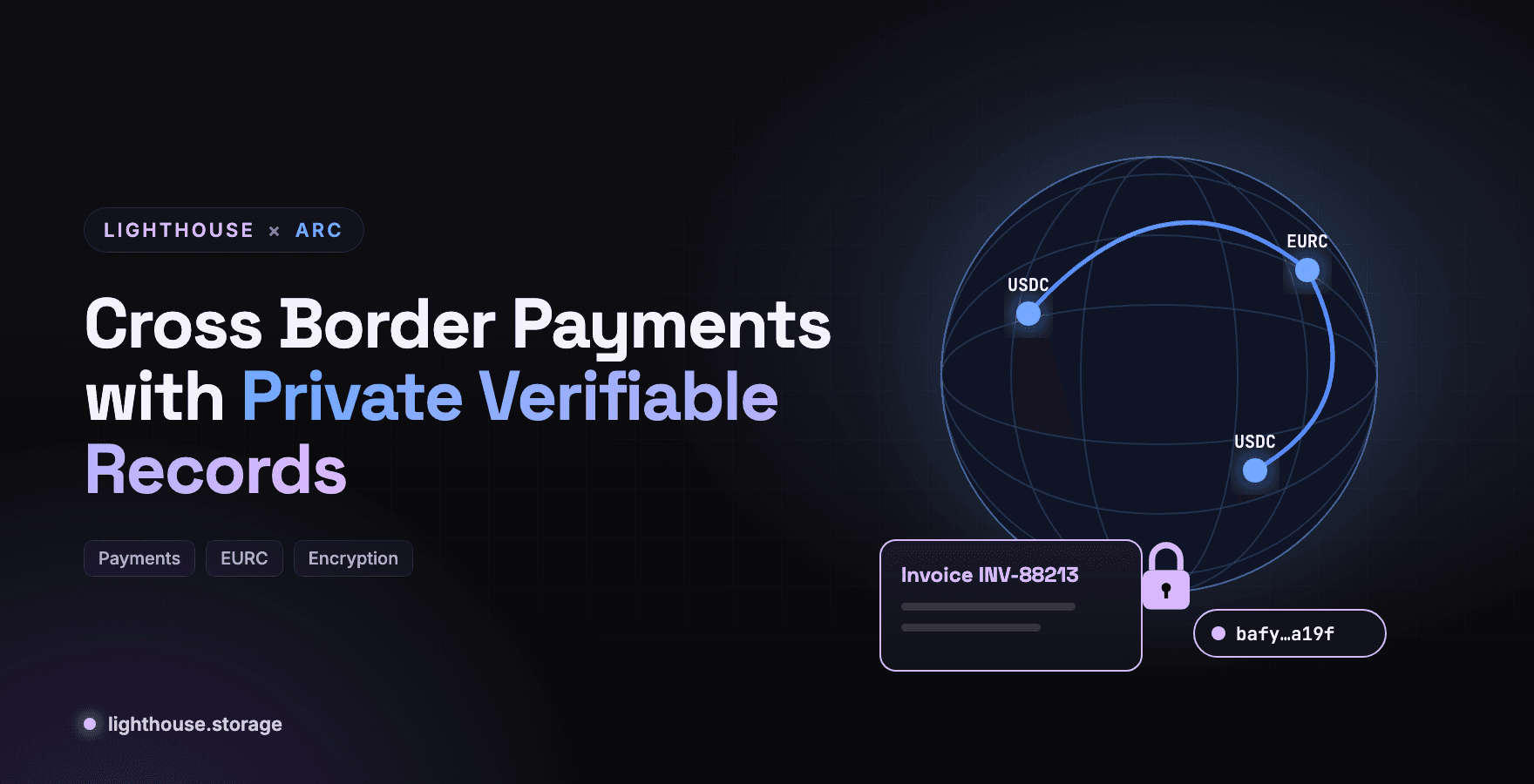
- Cross border payments need invoices, remittance advice and compliance records.
- Capital markets settlement needs trade confirmations and legal agreements.
- AI agents need memory, datasets and receipts for what they bought.
- Consumer apps and NFTs need media and metadata.
A USDC transfer that settles in under a second is not much use if the invoice it paid lives in an email attachment that nobody can verify later.
How Lighthouse Fits Into Arc
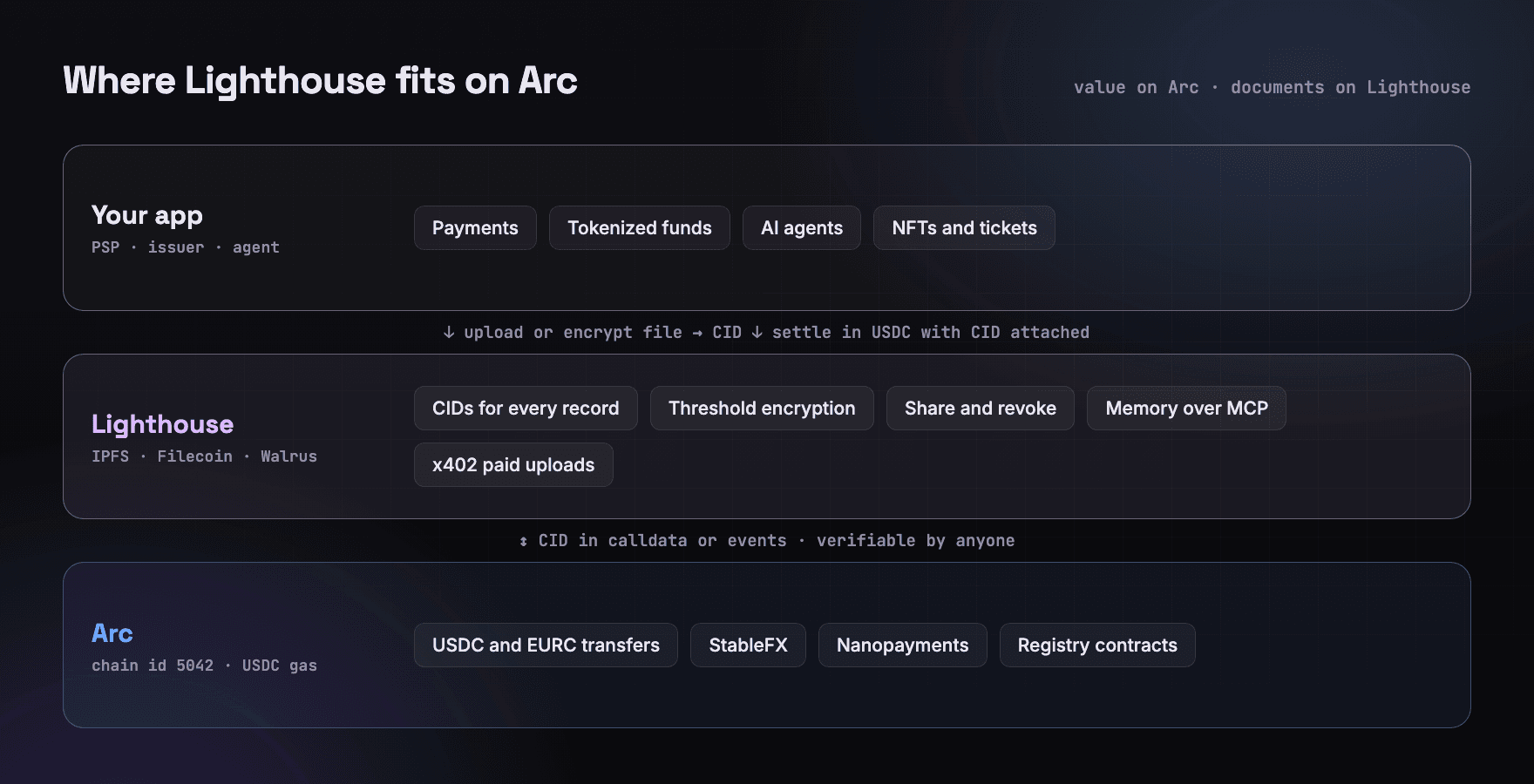
Lighthouse is a storage layer across IPFS, Filecoin and Walrus with client side encryption and programmable access control. On Arc it plays four roles.
Content addressed records. Every file gets a CID derived from its bytes. Put the CID in an Arc transaction, event or contract, and the payment is permanently bound to one exact document.
Verifiable persistence. Files on the Filecoin path are held in storage deals with ongoing cryptographic proofs. Files on the Walrus path are erasure coded for fast reads.
Privacy that matches Arc's. Arc's opt in privacy protects amounts and balances. Lighthouse protects the documents. Files are encrypted client side and the key is split with BLS threshold cryptography across independent nodes, so Lighthouse never holds a complete key. Share with named addresses and revoke later, the file equivalent of a view key.
Dollar denominated storage for agents. Lighthouse already sells storage over x402 for USDC, the same protocol behind Circle Nanopayments. Today that rail settles on Base; see the chain note below.
import lighthouse from "@lighthouse-web3/sdk";

// Store an invoice, then settle it on Arc with the CID in the memo
const { data } = await lighthouse.upload("./invoice-INV-20931.pdf", process.env.LIGHTHOUSE_API_KEY);

await walletClient.writeContract({
  address: PAYMENTS_CONTRACT,
  abi: paymentsAbi,
  functionName: "payInvoice",
  args: [supplier, 125_000_000n /* 125 USDC, 6 decimals ERC-20 */, data.Hash],
  chain: arc,
});
Chain support notes. Lighthouse x402 payments settle in USDC on Base today, not on Arc; USDC moves between the two through Circle's crosschain infrastructure. Lighthouse access conditions also evaluate against chains on the published Chains Supported list, which does not yet include Arc. Storage, CIDs, encryption, sharing and revocation work on Arc applications today. For Arc native conditions, request support on Discord.
Where to Go Next
- Agents buying services with nanopayments: Agentic Commerce on Arc with x402 Nanopayments and Lighthouse
- RWAs and capital markets documents: Tokenized Assets on Arc Need Documents That Cannot Change
- Payments with private, verifiable records: Cross Border Payments on Arc with Private Verifiable Records
- Collectibles and creator media: NFTs on Arc with USDC Gas and Permanent Storage
Frequently Asked Questions
What is Arc? Arc is an open, EVM compatible Layer 1 blockchain built by Circle. It uses USDC as its gas token, reaches deterministic sub second finality with Malachite consensus, and targets payments, tokenized assets, FX and AI agent commerce. Mainnet launched on September 16, 2026.
What is the Arc chain ID?
Mainnet is 5042. Testnet is 5042002.
Does Arc have a native token? Gas is paid in USDC. Circle has minted an ARC token at genesis for security, utility and governance, but has not committed to a public launch, and fees remain payable in USDC.
Who runs Arc validators? A permissioned founding set including BlackRock, DTCC, Galaxy, ICE, Mastercard, MoneyGram, SBI Group, Standard Chartered, Sumitomo Corporation, Visa and Worldpay. Circle plans to move to proof of stake in 2027.
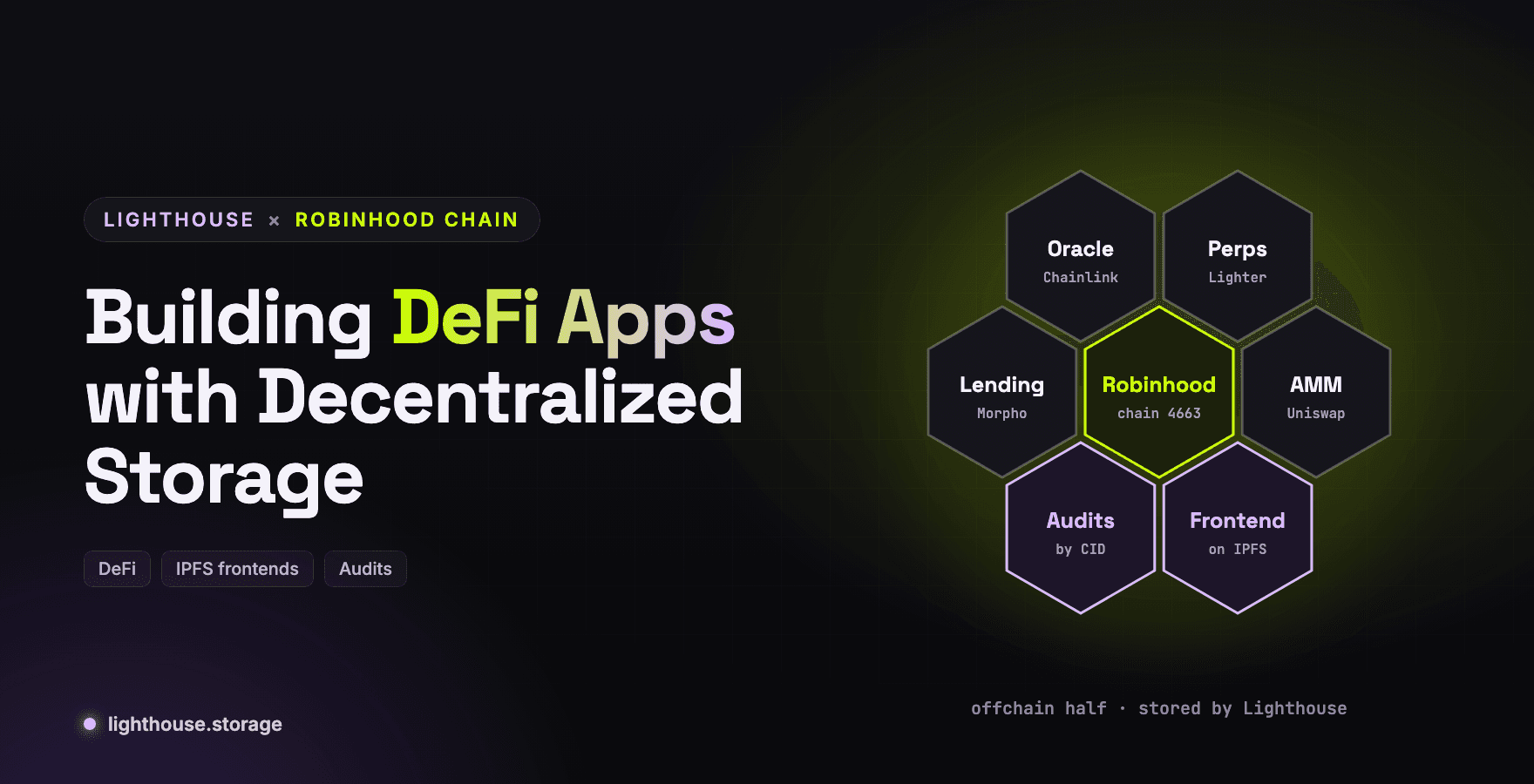
Where do Arc apps store files? Offchain, in content addressed storage such as Lighthouse on IPFS, Filecoin or Walrus, with the CID recorded onchain.
Get Started
Building on Arc? Start on the free tier, 5 GB on Filecoin with no card, or talk to our team.
Stay in Touch
Learn more at the website, docs, or GitHub. Join the community on Discord, X, Telegram, and LinkedIn.