Lighthouse Monthly Update - September 2026
Lighthouse Monthly Update – September 2026
The month we wrote down everything we know.
August was quiet on the timeline and loud everywhere else.
We expanded the blog into a proper reference library and shipped the Base integration that lets an agent pay for its own storage.
Not every month is a launch. Some months are the documentation you should have written two years ago.
Here is the month, and what September looks like from here.
Main Spotlight: New Writing, Organised Properly
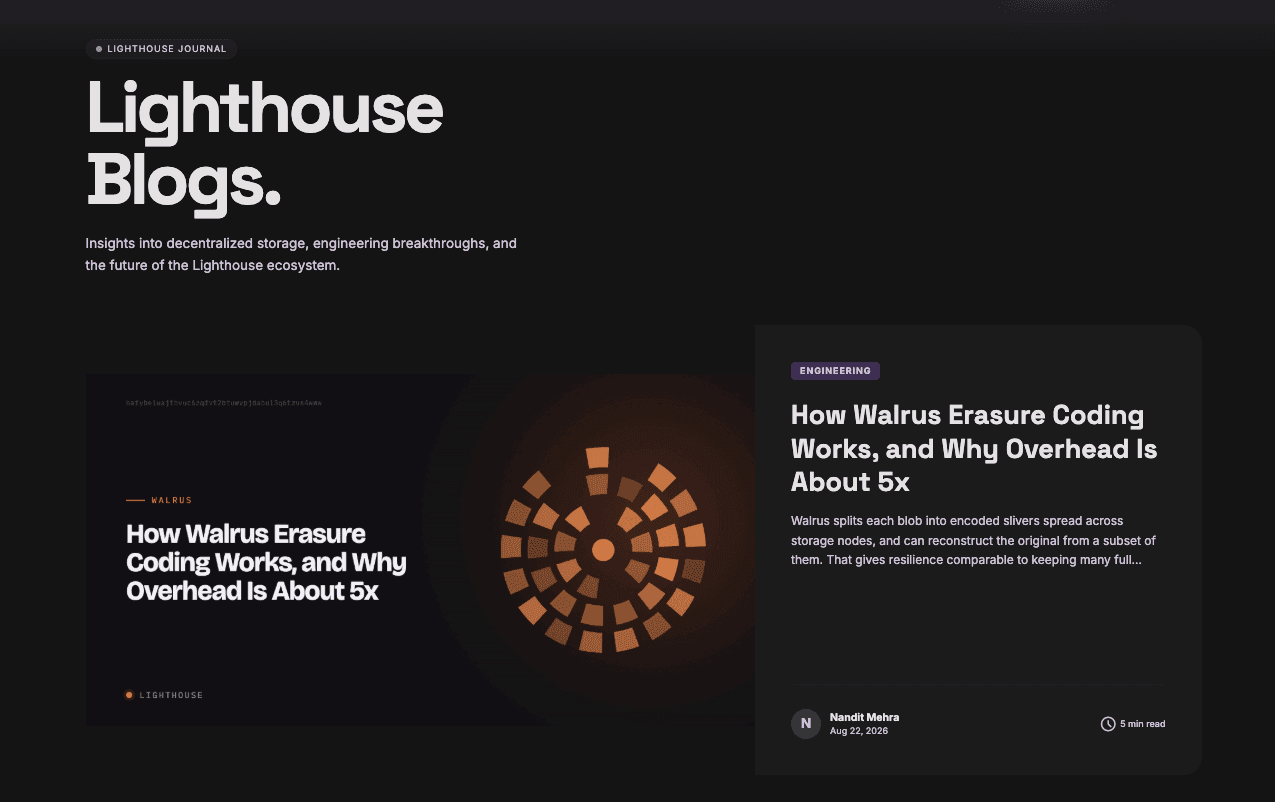
We added a batch of new posts this month and grouped the blog into categories that actually match how people arrive at it.
Walrus. What it is, how epochs and renewal work, blob IDs against CIDs, blobs as Move objects on Sui, using Walrus without running Sui infrastructure, and migrating from IPFS without changing your CIDs.
IPFS. What a CID is, why yours will not load, whether files disappear, whether IPFS is private, pinning existing CIDs, IPNS against DNSLink, and why NFT token URIs break.
Filecoin. Deal mechanics, the two proofs, what happens when a deal expires, verifying a file is genuinely stored rather than merely retrievable, and what storage actually costs in 2026.
Comparisons. Walrus against Filecoin. Filecoin against S3. Filecoin against Arweave. The pinning services against each other, ourselves included.
The comparisons are the ones worth your time, because each names where we lose. Direct Walrus access beats us on cost per byte. S3 beats us on latency and tooling maturity. Arweave beats us if you want one payment and no renewal process to forget. Pinata has the larger integration ecosystem.
A comparison that concludes "use us" for every reader is not a comparison. It is a brochure with a table in it.
Read the library: https://lighthouse.storage/blogs
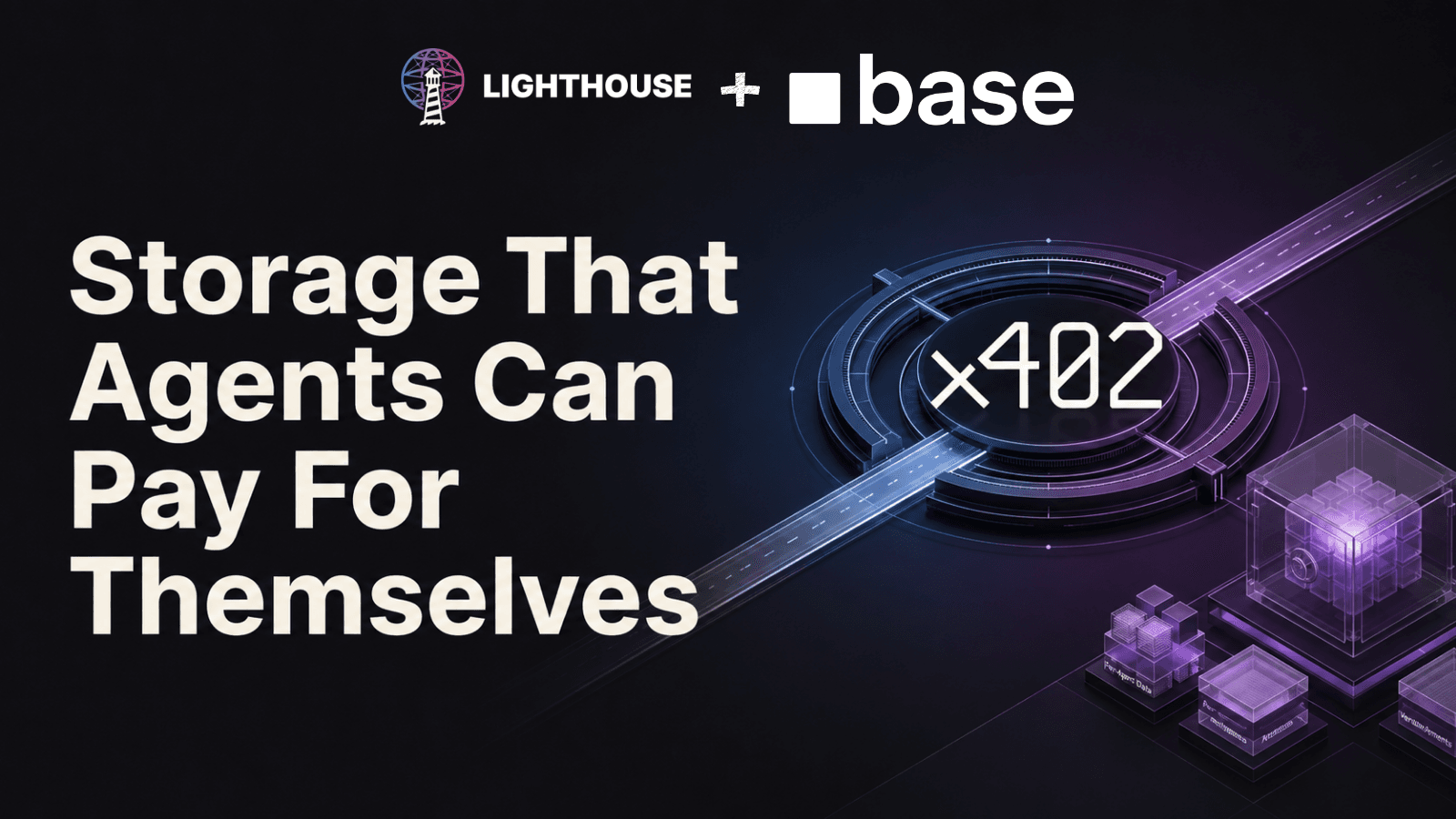
Lighthouse x Base: Storage That Agents Can Pay For Themselves
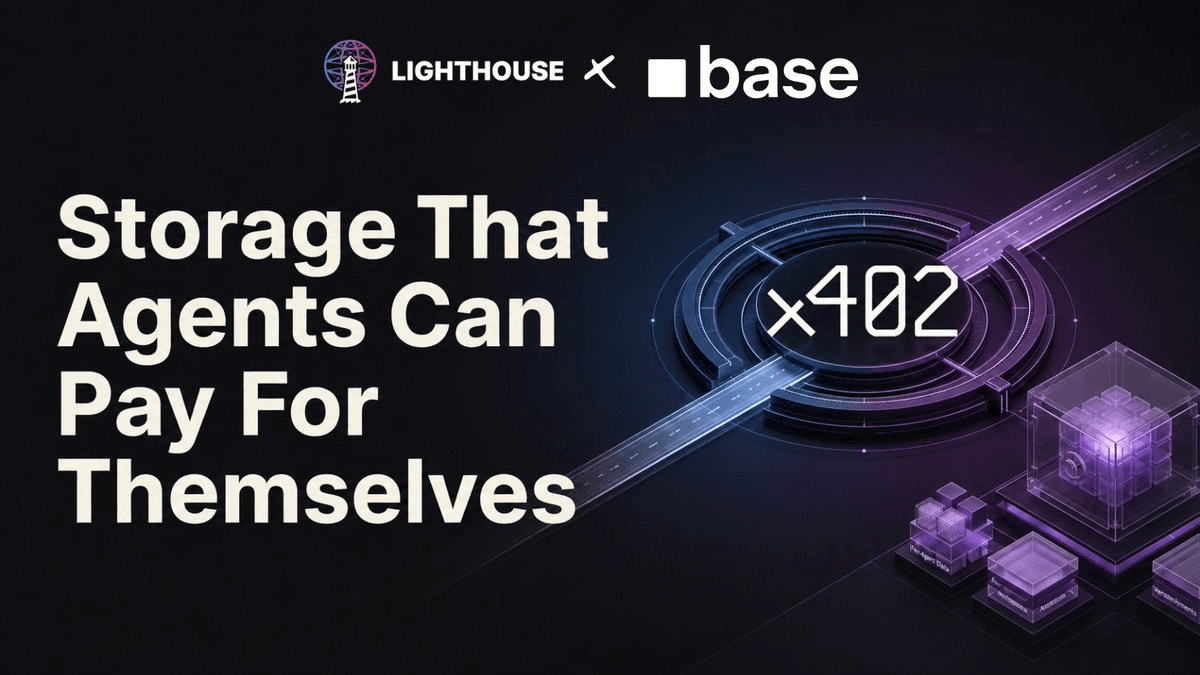
Base solved how machines settle payments. We solved where their data lives. x402 joins the two.
Four moves. A client posts a file. The server returns HTTP 402 with a price sized to the file. The client pays USDC on Base automatically. It retries with proof of payment and receives a CID.
What comes back is two independently checkable facts. A CID proving what was stored, and a transaction hash on Base proving what was paid. For anything that has to be defensible later, that pairing is the audit trail.
x402 works on both storage paths. IPFS and Filecoin through the pay per use endpoint, and Walrus through a hosted endpoint, so an agent can pay in USDC on Base for storage.
Reference: https://x.com/LighthouseWeb3/status/2089344225813143933
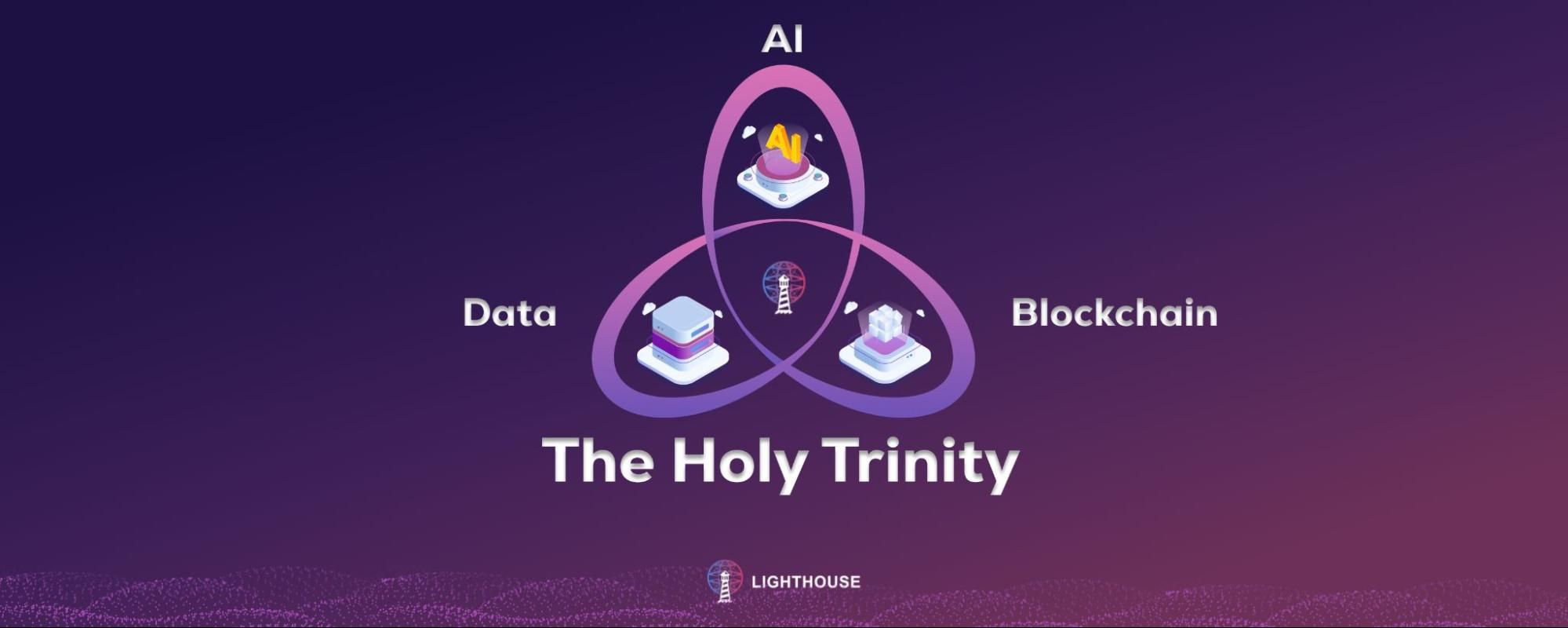
The Thesis: Three Properties, and the One Everybody Skips
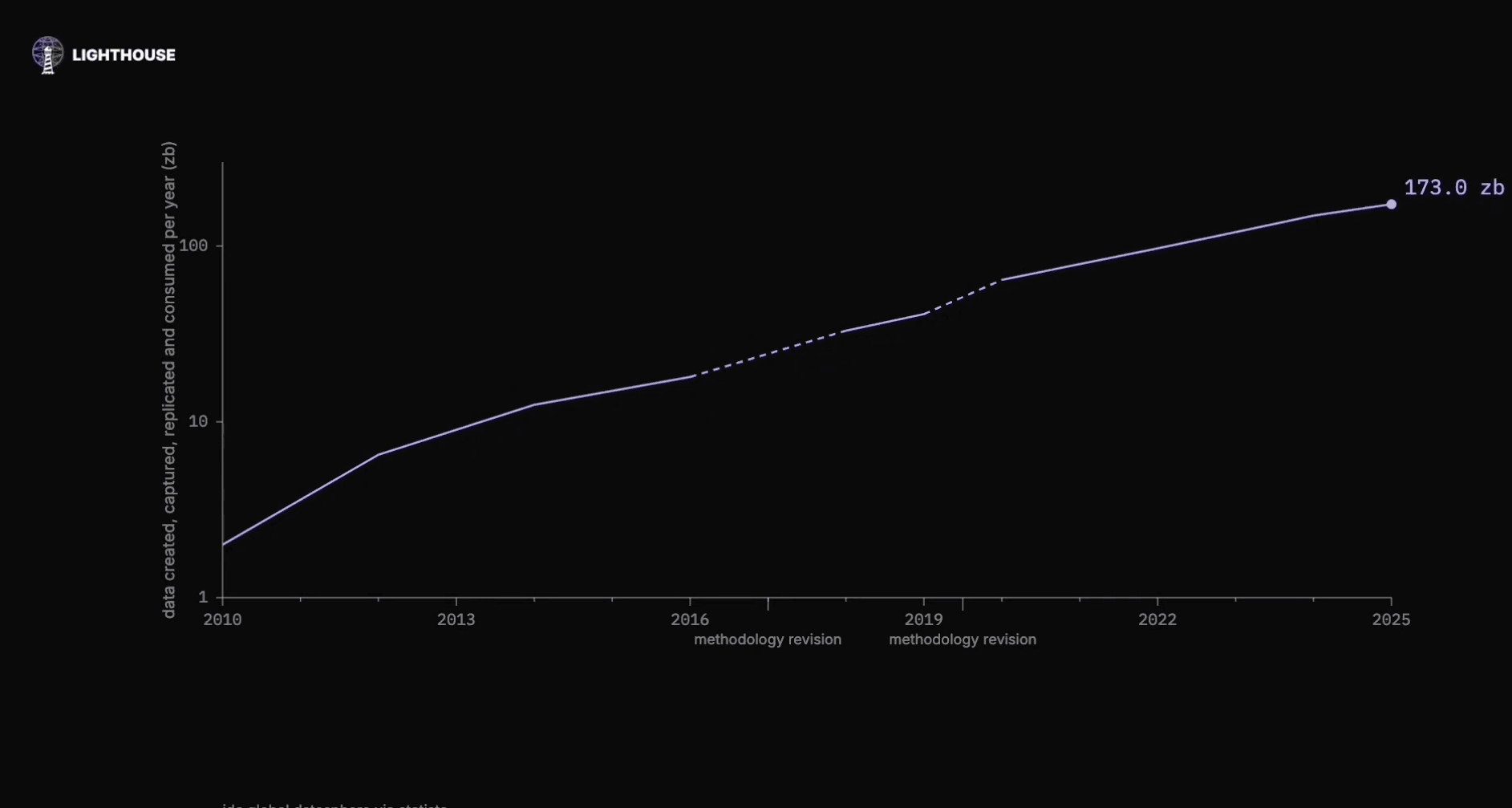
In 1956, five megabytes of disk was the size of a fridge. In 2025, the world created, captured and replicated 173 zettabytes.
The next stretch of that curve does not get written by people. Agents are already writing memory, receipts and state at machine speed, and most of it has to outlive the process that produced it.
That data has to persist, stay verifiable, and stay unreadable to whoever is holding it.
The third is where infrastructure quietly breaks, because decentralized and private get used as though they were the same property. They are not related at all. IPFS has no access control in the retrieval path. Filecoin and Walrus store whatever bytes they are handed, plaintext included.
Kavach is our answer. Files are encrypted client side before anything leaves. The key is split with BLS threshold cryptography across independent nodes, so no single node holds a complete key. Reconstruction requires a threshold of nodes to each independently check the requester against conditions you defined, on live chain state, before releasing a share.
The consequence is structural rather than contractual. We cannot read your files. Storage node operators cannot read your files. There is no plaintext and no complete key sitting there to take.
That is a different sentence from "we promise not to look."
Reference: https://x.com/LighthouseWeb3/status/2086688216535757099
Ecosystem Mentions
Kumami World. We announced a partnership on 16 August, positioning Lighthouse as the storage layer for their builders with client side encryption on the IPFS path.

Reference: https://x.com/kumamiworld/status/2088929168826540505
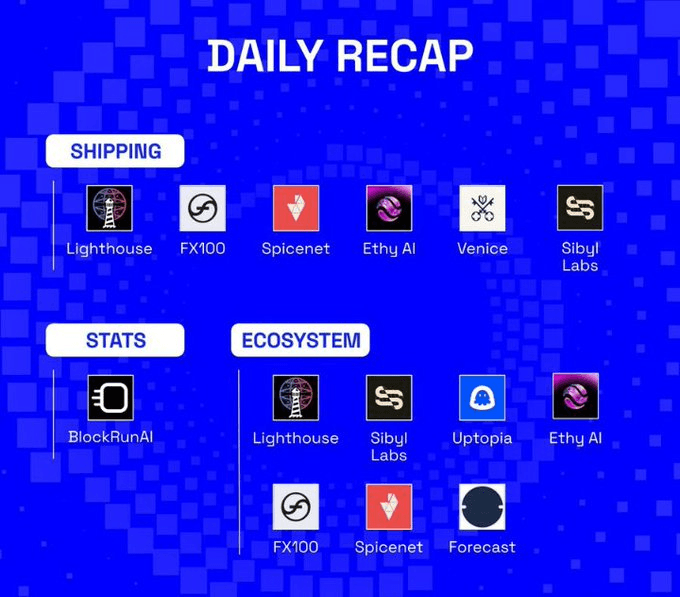
Base Daily Recap. The x402 integration ran in the 18 August roundup, framed as agents paying for decentralized storage in USDC.
Reference: https://x.com/gumterver100/status/2089618137251492101
What Comes Next
Deeper Walrus integration. Phase one covered the write path and the SDK. Next comes retrieval performance and availability guarantees, with the same rule holding. Your CIDs do not change and your code does not move.
More backends, one interface. Developers should not have to pick a storage network the way they pick a religion. Write once, choose the backend that fits the workload, change your mind later without breaking a reference.
x402 everywhere it fits. The path works today. Next step is making it the obvious default for anything autonomous rather than something you go looking for.
One More Thing
An agent that loses state cannot be trusted with anything longer than a session. An agent that cannot prove what it read cannot be audited. And an agent whose memory anyone can read is not carrying memory, it is carrying a liability.
We have been building against all three.

More soon.
Wrapping Up
August did not look like much from outside. One integration, a quiet timeline.
What actually happened is that we wrote down what we know, published the comparisons that make us look worse where we are worse, and shipped the payment layer that lets an agent buy its own storage without asking anyone.
Documentation is not a growth tactic. It is what you have instead of one when the thing you sell has to be trusted for years.
The stack got clearer underneath without asking builders to change a line.