Lighthouse Monthly Update - August 2026
Lighthouse Monthly Update – August 2026
The month the data layer stopped being backend and became the moat.
August is where the storage conversation changed shape. Walrus support landed in the SDK, which means the upgrade path we announced in June is now something you can actually call. Around that, the AI agent thesis got sharper, the supply crunch nobody is pricing in became a founder conversation worth having in public, and the ecosystem carried the Walrus story further than we could have on our own.
Here is the month.
Main Spotlight: Lighthouse SDK v0.4.7, Walrus Support in the SDK
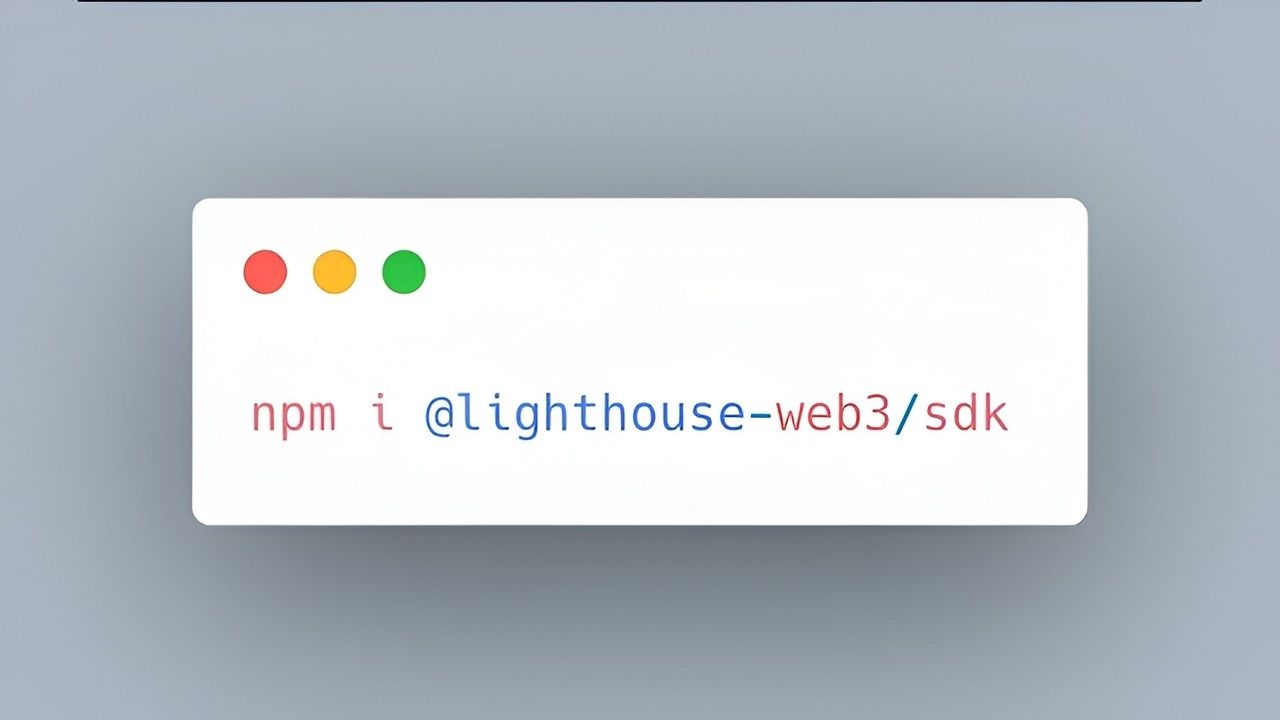
In June we announced that Lighthouse supports Walrus. This month it shipped into the SDK.
Walrus support is now available directly in v0.4.7. Same CIDs. Same workflow. Same developer experience. If you are already building on IPFS through Lighthouse, this is a version bump, not a migration.
That is the entire design goal. Decentralized infrastructure usually asks you to rewire your integration before you can benefit from it. This does not. You keep your CID based workflow, your gateways, and your SDK calls, and Walrus handles blob storage and erasure coding underneath.
What you get on the other side: high performance retrieval, verifiable data availability, and a storage path suited to workloads where reads and writes are continuous rather than occasional. That last part matters more than it sounds. Agent workloads do not look like human upload patterns.
Reference: https://x.com/LighthouseWeb3/status/2077423468812075301
By the Numbers
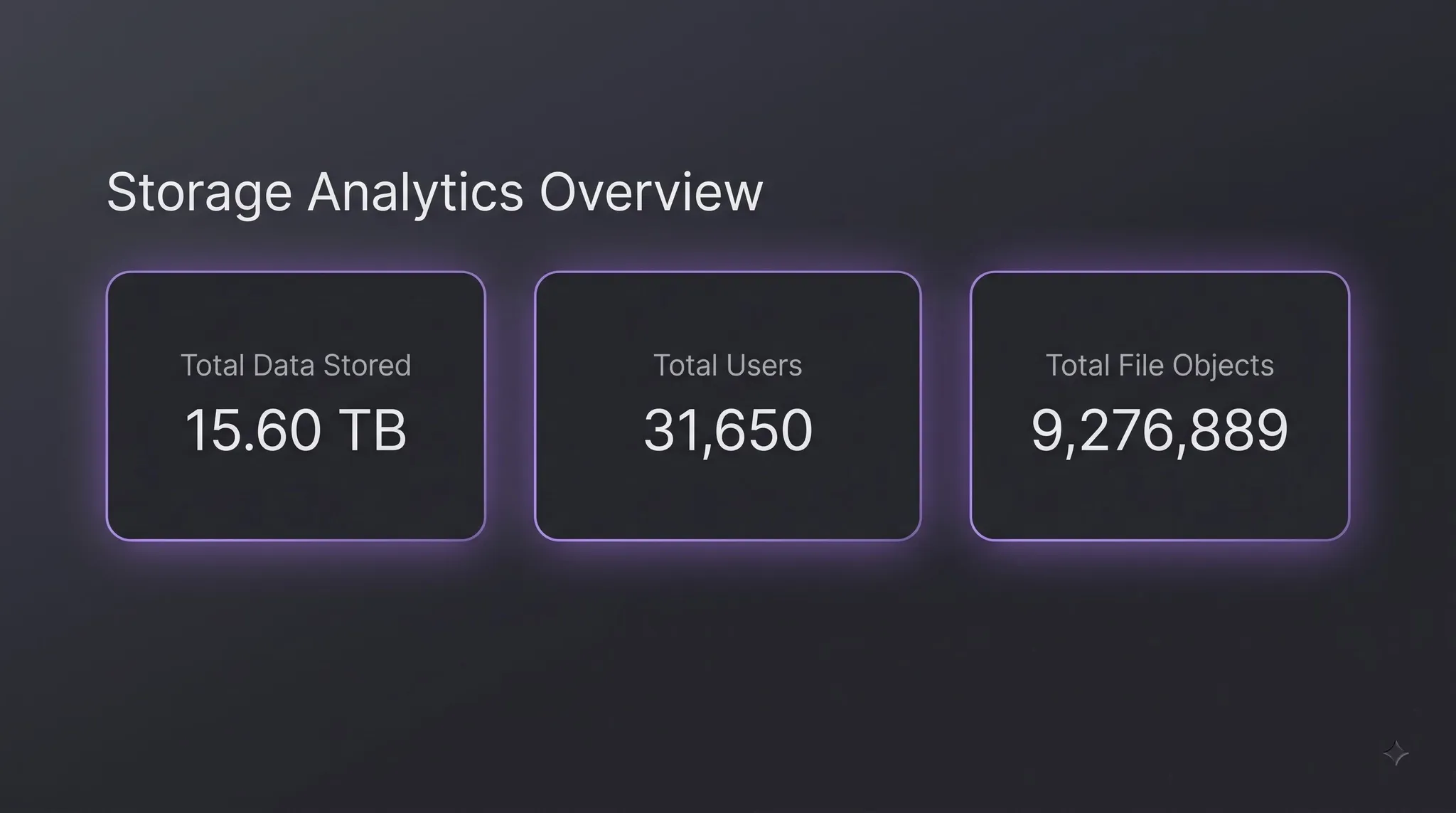
The Lighthouse explorer is public, so these are not marketing figures.
- 31,650 developers and teams building on Lighthouse
- 9,276,889 file objects stored
- 15.60 TB of total data stored
The shape of the curve is the part worth looking at. Growth was close to flat through 2022 and most of 2023. It inflected in late 2024 and has not slowed since. That timing is not a coincidence. It maps almost exactly to when teams started putting agents into production and discovered that ephemeral storage and session-scoped memory do not survive contact with autonomous systems.
Infrastructure adoption curves are slow until the problem they solve becomes urgent. Ours became urgent.
Ecosystem Growth: The Thesis, Stated Plainly
Storage is the new moat
We put out a thread this month arguing something that has been sitting under most of our product decisions for two years.
The hidden infrastructure layer powering AI agents in 2026 is not the model. It is the data layer underneath.
Verifiable memory. Reliable backups. High data availability for autonomous systems. Every one of those is a storage problem wearing a different name.
An agent that cannot prove what it read cannot be audited. An agent that loses state cannot be trusted with anything running longer than a session. An agent operating on data nobody can verify produces outputs nobody can defend. As models converge and get cheaper, the differentiation moves down the stack to what the agent remembers and whether that memory holds up under scrutiny.
Storage stopped being a cost line. It became the thing the rest of the stack depends on to be true.
Reference: https://x.com/LighthouseWeb3/status/2082317249856348668
Community Engagements: Voice of the Builders
Founder's Cut with Cluster Protocol
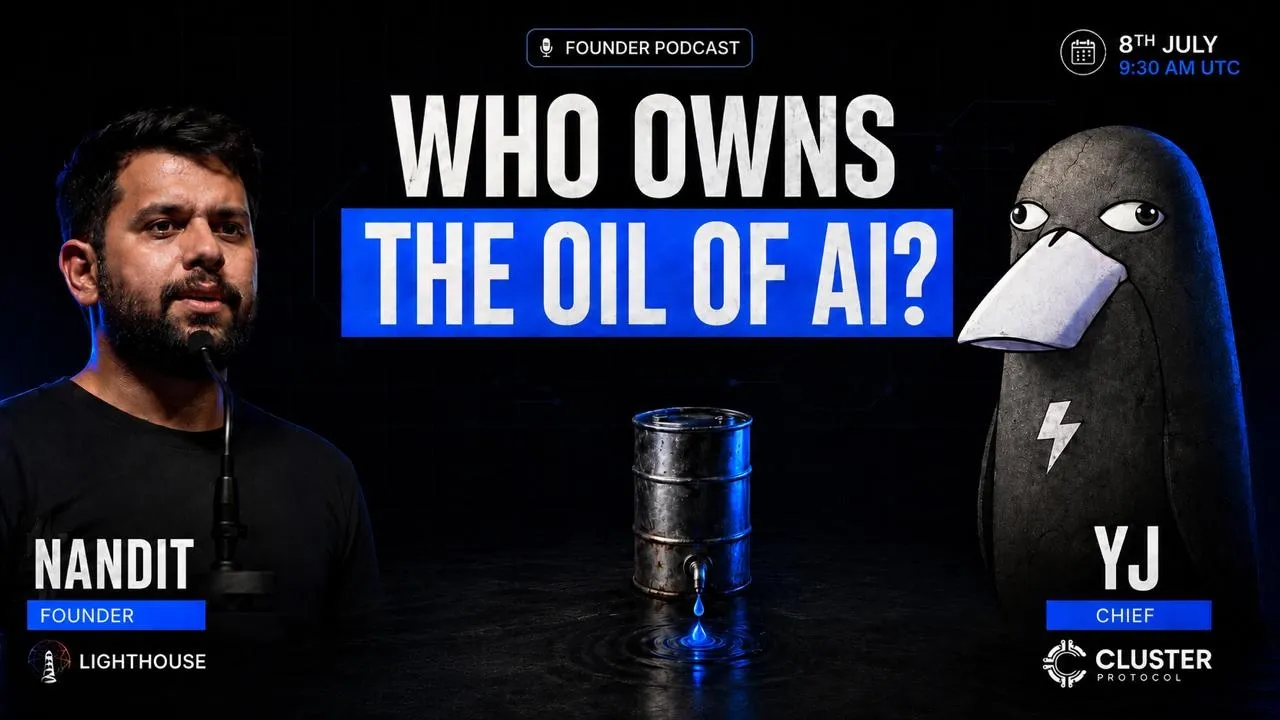
Nandit sat down with Chief from Cluster Protocol for Founder's Cut on who actually owns the oil of AI.
Everyone talks about models. Fewer people ask where the data lives, who controls access to it, and whether it survives long enough to matter. That third question is the one most teams answer too late.
The line that traveled furthest from the conversation was about supply. The hardware they will build in 2030 is already sold out. Big tech is buying GPUs, memory and drives like there is no next cycle, and the storage names have moved a thousand percent plus on the back of it. That is not a market narrative. It is a supply signal, and it changes what a three year data strategy has to look like if you are a startup competing for the same physical capacity as hyperscalers.
Reference: https://x.com/ClusterProtocol/status/2074194660822786113
Reference: https://x.com/ClusterProtocol/status/2083199041379475542
How to Survive the Bear, with Growthy
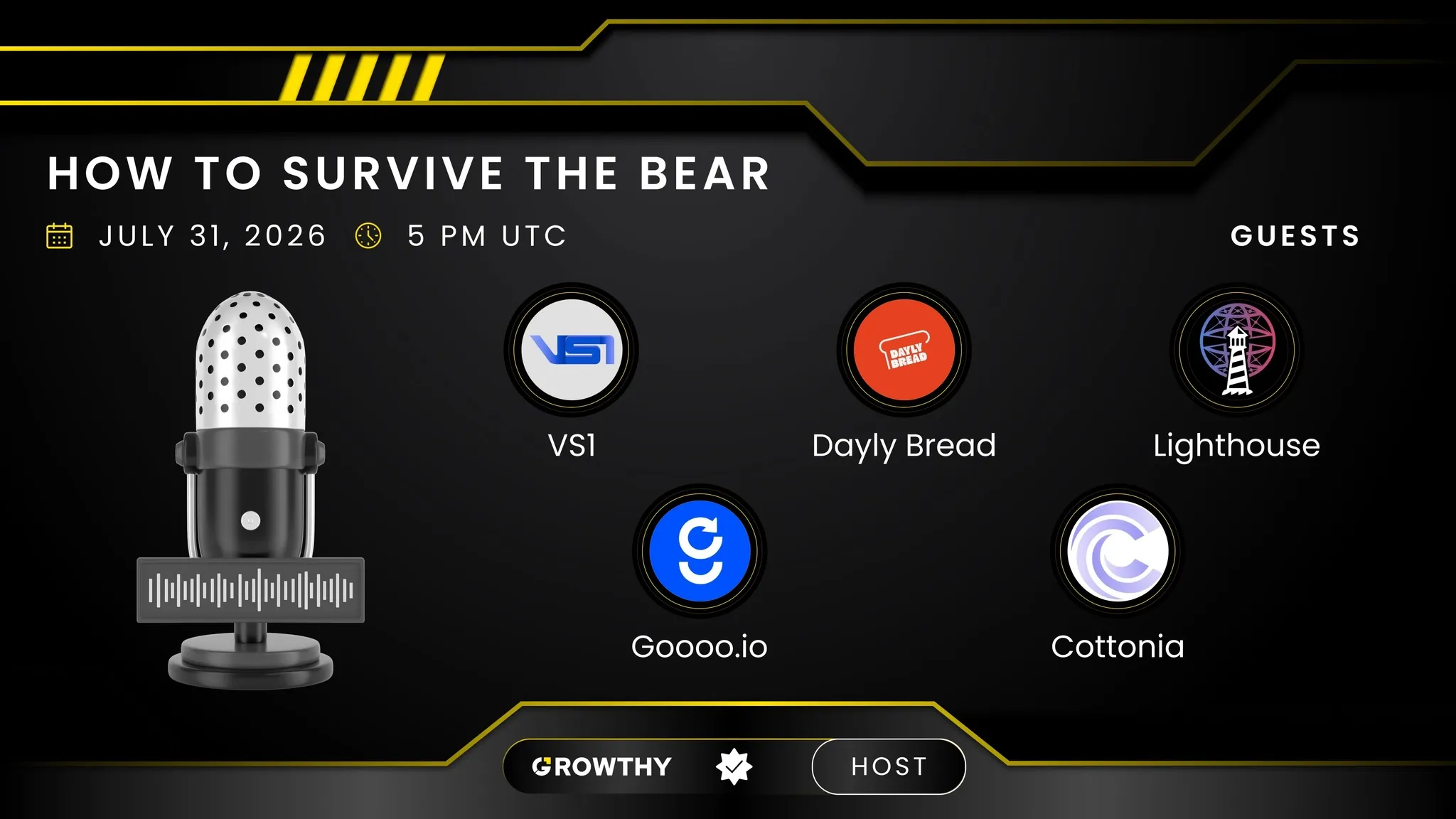
We joined VS1 Finance, Cottonia AI and others for a Growthy session on what builders do when attention disappears. Positioning, founder visibility, community, partnerships, and which strategies still work when the market goes quiet. Every bull market has heroes. Every bear market has survivors.
Reference: https://x.com/Growthy_Web3/status/2083154180487749793
Ecosystem Mentions: Spotlight from the Community
Walrus Blog
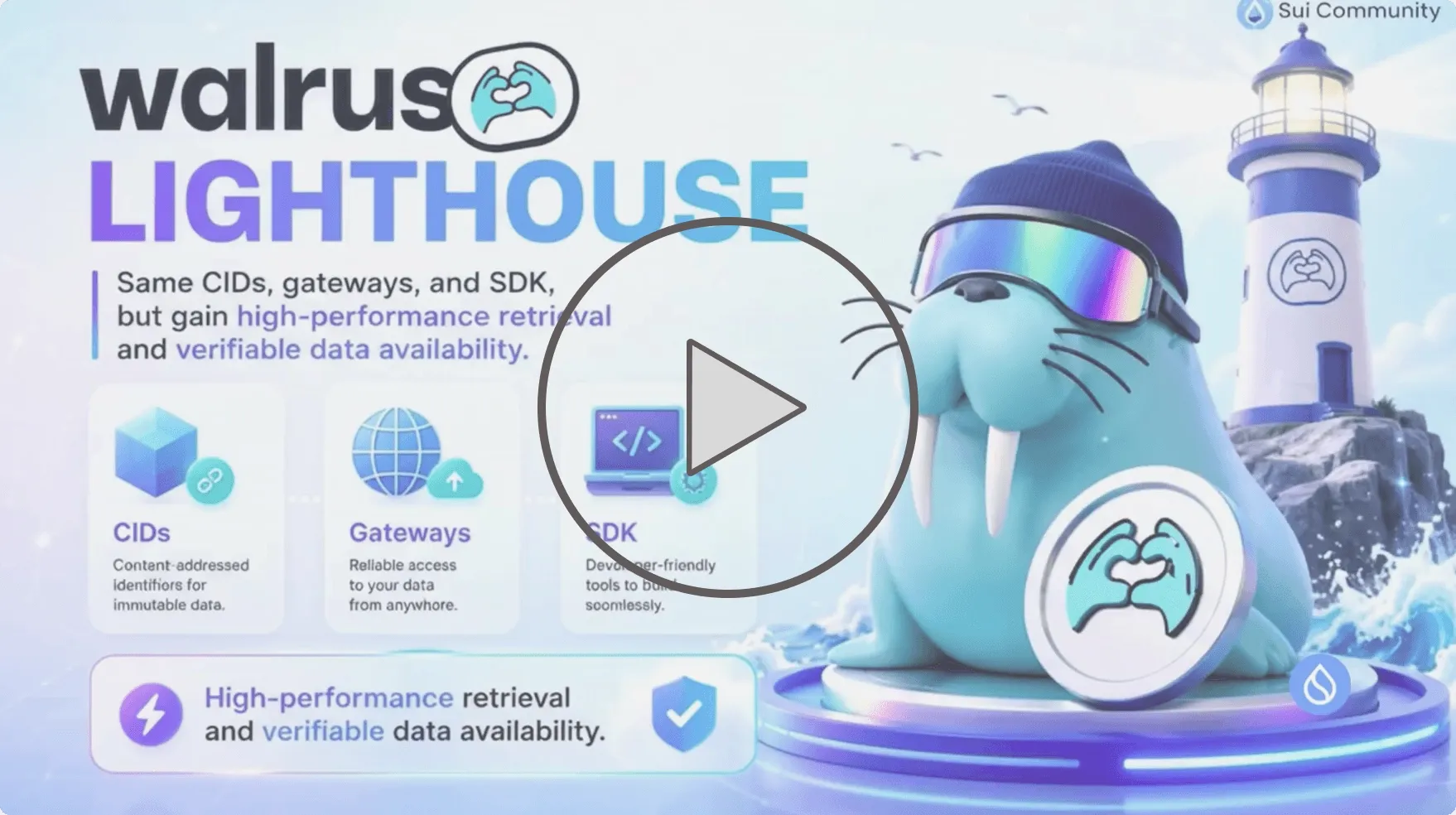
The full technical write up on bringing Walrus to the IPFS ecosystem through Lighthouse is live on the Walrus blog.
Reference: https://blog.walrus.xyz/bringing-walrus-to-the-ipfs-ecosystem-through-lighthouse/
Sui Community on the Walrus Upgrade
The Sui community carried the Walrus upgrade to their own audience: 2,000+ teams already building on IPFS through Lighthouse can now upgrade to Walrus for high performance retrieval and verifiable data availability, without changing how they build. Same CIDs, same gateways, same SDK. Nothing to migrate, nothing to rewrite.
Reference: https://x.com/Community_Sui/status/2072422491000291359
Sui Indonesia
The Indonesian Sui community picked it up as well, framing it for builders shipping dApps on Solana and Ethereum who want faster retrieval and on chain availability proofs without touching their existing IPFS workflow.
Reference: https://x.com/SuiCommunity_ID/status/2072052809726570596
Builder Focus: Trend Activity


Turby kept the timeline warm this month. World Emoji Day got a nod, because every upload tells a story, and Decoy Font made the rounds, a typeface humans read one way and machines read another. Not every post has to be infrastructure. Some of them are just fun.
Reference: https://x.com/LighthouseWeb3/status/2078095298463936750
Reference: https://x.com/LighthouseWeb3/status/2078969951503950145
What Comes Next
August closes with the direction clearer than it has been in a while.
Deeper Walrus integration. Phase one covered the write path and the SDK. The next phases push further into retrieval performance and availability guarantees, with the same rule holding: your CIDs do not change and your code does not move.
Encrypted storage for agent workloads. Kavach handles client side encryption with key custody that stays with you. As more usage shifts toward autonomous systems, that becomes the difference between an agent that can access the data it needs and an agent that can access everything.
More backends, one interface. We keep adding storage networks behind a single SDK. Developers should not have to pick a storage network the way they pick a religion. Write once, choose the backend that fits the workload.
Payments built for machines. x402 is live. Agents that need to pay for storage without a human in the loop have a working path today.
Wrapping Up
August was a compounding month.
The Walrus upgrade moved from announcement to SDK. The ecosystem carried it further than our own channels could. The AI conversation started acknowledging that the constraint has moved from models to the data layer underneath them, which is the argument we have been making since before it was convenient. And the supply crunch discussion gave the whole thing a deadline, because capacity being bought years ahead of delivery is not a problem you solve at the last minute.
The stack got stronger underneath without asking builders to change a line. Second month in a row.
That is how a moat gets built.