Filecoin vs AWS S3: An Honest Comparison
S3 wins on latency, tooling and operational maturity. Filecoin wins on verifiability, provider independence and censorship resistance. If you need the second set of properties, you can now have them without giving up the first set of ergonomics.
Most comparisons on this topic are written by people selling one of the two. We sell access to the second, so here is the version with the concessions left in.
Where S3 is simply better
Latency. Single-digit millisecond first-byte times from a nearby region, consistently, at any scale. Filecoin data is sealed and cold; retrieval requires unsealing or a hot cache in front. Even with a well-run hot layer, you are not beating a warm S3 object in the same region.
Operational maturity. Two decades of tooling, monitoring, lifecycle policies, IAM, and every consultant on earth knowing how it works. This is worth more than teams admit until they are debugging at 3am.
Ecosystem integration. Every framework, every CI system, every analytics tool speaks S3 natively.
Regional control. Need data in Frankfurt and only Frankfurt, for a regulator who wants it in writing? S3 gives you that with a checkbox. Filecoin's provider set is global by design.
Predictable cost at low volume. Small workloads on S3 are cheap and the pricing is well understood, even if egress fees are notoriously unpleasant at scale.
If none of the properties in the next section matter to you, use S3. That is a real recommendation, not a rhetorical concession.
Where Filecoin gives you something S3 cannot
Verifiability by a third party. An S3 object is whatever AWS returns. There is no way for an outside party to confirm the file you served is the file you originally stored, and no way to prove it was not altered. A CID plus an on-chain deal record lets anyone check both, without your cooperation. For audit trails, published datasets, regulatory evidence and provenance claims, this is not a nice-to-have; it is the entire requirement.
Continuous proof of storage. Providers submit PoRep and PoSt proofs on a schedule with collateral at risk. AWS's durability figure is a statistical claim about their infrastructure that you accept because it is AWS. Both are credible. Only one is checkable.
Provider independence. Content addressed by CID can be served by anyone holding the bytes. Moving between providers does not change identifiers, so nothing downstream breaks. S3 keys are bound to a bucket in an account with a vendor; migration is a project.
Censorship resistance. A single company can decide to stop serving your data. A market of independent providers is much harder to lean on.
No egress cliff. Data transfer costs are a well-known reason S3 bills surprise people at scale.
Side by side
| AWS S3 | Filecoin, via Lighthouse | |
|---|---|---|
| First-byte latency | Milliseconds | Hot layer dependent |
| Durability claim | Vendor SLA | On-chain proofs |
| Third-party verification | No | Yes, via CID and deal |
| Provider lock-in | High | None; CIDs are portable |
| Regional pinning | Precise | Not by design |
| Egress cost | Significant at scale | Not metered the same way |
| Encryption | At rest, vendor holds keys | Client-side, threshold, vendor holds nothing |
| S3 API compatibility | Native | Yes, via L3 |
| Ecosystem tooling | Enormous | Growing |
The row that surprises people
Encryption. S3 encrypts at rest, and by default AWS manages the keys. That protects against a stolen disk. It does not mean the operator cannot read your data — with SSE-S3 or SSE-KMS, they hold the keys. You can bring your own with SSE-C, at which point key management is your problem and the ergonomics get worse.
With Lighthouse, files are encrypted client-side before upload, and the key is split with BLS threshold cryptography across independent nodes so that no single node ever holds a complete key. We cannot read your files. Storage providers cannot read your files. Breaching our infrastructure does not expose contents, because there is no plaintext and no whole key to take.
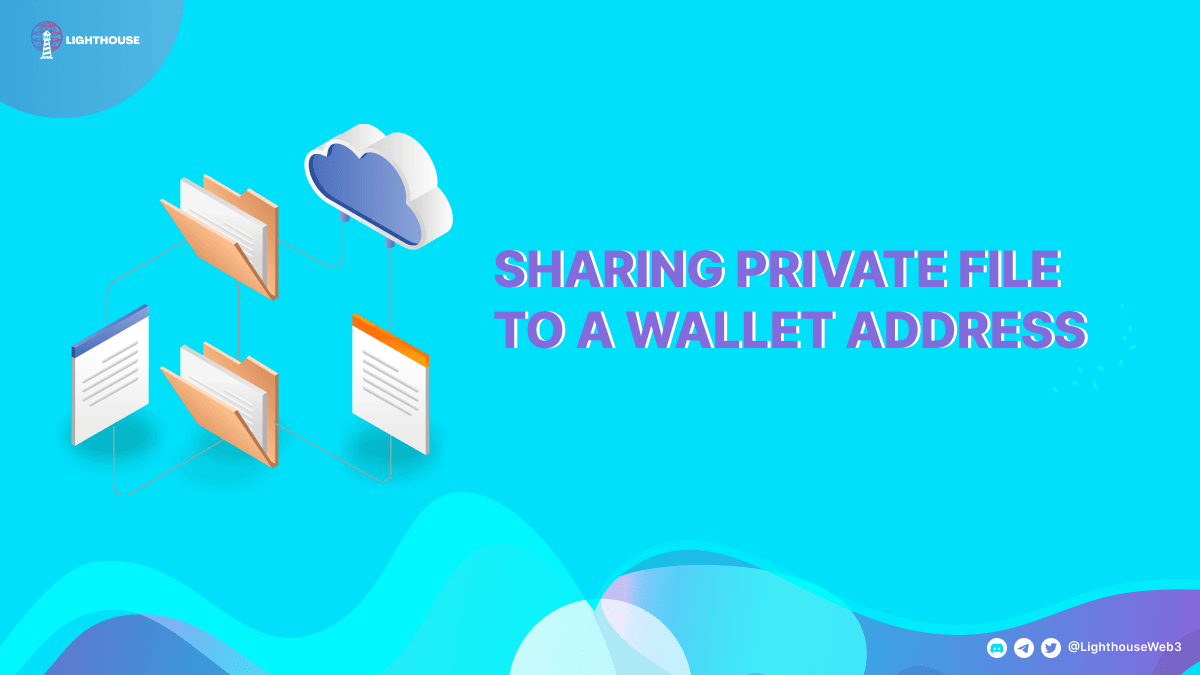
Access control then runs on-chain conditions rather than IAM policies: token balances, NFT ownership, custom contract return values, time windows, passkeys, zkTLS proofs, combined with boolean logic, with revocation. For multi-party scenarios — each counterparty decrypting only their portion of a document set — that is considerably more expressive than a bucket policy.
You do not have to rewrite anything
The usual objection is migration cost. That is what L3 is for: an S3-compatible endpoint with AWS Signature V4 auth, path-style addressing, buckets, keys, multipart uploads and presigned URLs.
Point the AWS CLI, boto3, aws-sdk-js or rclone at it and files land on Lighthouse, content-addressed and backed by Filecoin deals. Every object response carries its CID in the x-amz-meta-cid header, so you get content addressing without touching client code. S3 credentials are self-served by exchanging a Lighthouse API key.
Read the S3 and IPFS semantics reference before storing anything sensitive, because mutable S3 operations map onto immutable content addressing in ways that matter for overwrite and delete behaviour. That is a genuine sharp edge, not a formality.
Amazon S3 is a trademark of Amazon.com, Inc. Lighthouse is not affiliated with or endorsed by Amazon; S3 is referenced here to describe protocol compatibility.
How to decide
Ask what happens if someone challenges your data six years from now — a regulator, a counterparty, a court, an auditor. If "our cloud provider says so" is a sufficient answer, S3 is fine and cheaper to operate. If you need to prove the artifact is unaltered and the storage was real, that is what content addressing and on-chain proofs are for.
And if the answer is "both, for different data," that is the normal case: transactional and latency-sensitive data on S3, verifiable artifacts and archives on Filecoin, S3 ergonomics on both sides through L3.
Get Started
- L3, the S3-compatible API
- Create S3 keys
- S3 and IPFS semantics
- Limits and differences
- Create an API key and start on the free tier
Stay in Touch
To learn more about Lighthouse, visit the official website, read the documentation, or jump in on GitHub. You can also join the community on Discord, X, Telegram, or LinkedIn.